
Seguici su Facebook

Seguici su instagram




San Gimignano is one of those places you see from miles away: the towers rise above the hill long before you get there, and the temptation to set the sat nav to Piazza della Cisterna is strong. That is exactly the mistake that costs thousands of visitors a fine every year, because that square sits inside a restricted traffic zone which, since 1 May 2026, has six video-controlled gates. This guide tells you where to leave the car, what it costs, who may actually drive inside the walls and what to see once you have parked, using figures taken from the town council rules rather than second-hand accounts.
The starting point is simple: in San Gimignano you need a car to get there, not to drive around inside. The old town is walked in half a day, while everything that makes it special, the Vernaccia wineries, the gravel roads, Volterra and the nearby villages, can only be reached on four wheels. Renting from Revirent24 in Città della Pieve or Chiusi means having your own car for the whole trip, with no bus timetables and no connections.
Why you really do need a car in San Gimignano
San Gimignano has no railway station. That is not a detail: it is the reason why the town, despite being one of the most visited places in Tuscany, remains awkward for anyone travelling without their own vehicle. The two reference stations are Poggibonsi-San Gimignano, about 13 kilometres and twenty minutes away, and Certaldo, about 15 kilometres away. From either one you still need a regional bus, and services thin out on Sundays and public holidays.
The second reason is the countryside around the town: hills, narrow provincial roads and gravel lanes leading to the wineries. No public transport goes there. If your trip includes a Vernaccia tasting, a visit to Volterra or a detour towards Monteriggioni, a car is not a comfort, it is the only realistic option.
How far San Gimignano is from our offices
Starting from Città della Pieve or Chiusi, San Gimignano is a full day out rather than a half-day trip. The easiest route goes through Siena and then along the Siena-Florence dual carriageway, leaving at Poggibonsi Nord. These are the real road distances, measured along the driving route and not as the crow flies.
| Starting point | Distance | Approximate time |
|---|---|---|
| Città della Pieve | 133 km | about 2 hours |
| Chiusi-Chianciano Terme station | 127 km | about 2 hours |
| Chianciano Terme | 113 km | 1 hour 50 minutes |
| Montepulciano | 105 km | 1 hour 40 minutes |
| Castiglione del Lago | 120 km | 1 hour 45 minutes |
| Siena | 45 km | 50 minutes |
| Florence city centre | 59 km | 1 hour |
| Florence airport | 63 km | 1 hour 5 minutes |
| Pisa airport | 77 km | 1 hour 30 minutes |
The practical advice is to break the journey: Siena is halfway and is the natural stop, or you can pull off for Monteriggioni, which is only a few minutes from the main road. If you are flying in, the details are in our guide on how to reach Chiusi and Città della Pieve from the airports.
The new ZTL since 1 May 2026
This is the part most online guides have not updated yet. San Gimignano has had a restricted traffic zone for decades, but the rules were scattered and enforcement relied on officers being physically present. After a trial phase that started on 1 July 2025, the video control system for accesses came fully into force on 1 May 2026, together with a single set of rules that brings all the provisions into one document.
Two practical consequences for visitors. First: the video-controlled accesses are generally active every day, 24 hours a day, unless the rules provide otherwise. There is no free time window, which is what many people assume. Second: the zone covers the entire perimeter of the UNESCO site, that is the whole old town inside the walls, not only the monumental squares.
There is good news: access itself remains free of charge. Permits cost nothing, they simply have to be requested in the right way and at the right time. The issue is not the price, it is the procedure.
The six gates and the streets you cannot drive into
There are six gates into the old town: Porta San Giovanni, Bonda/Piandornella, Via Santa Caterina, Via di Quercecchio, Porta San Matteo and Via di Bagnaia. Each one has a camera reading number plates.
Inside the zone the rules distinguish between main streets and squares and secondary streets, and the difference matters, because driving and parking rules are not the same. The main streets and squares are Via San Giovanni, Via San Matteo, Piazza del Duomo, Piazza della Cisterna, Piazza delle Erbe and Via del Castello: in practice the entire monumental core you would want to photograph. The secondary streets include Quercecchio, Berignano, Santa Caterina, Folgore da San Gimignano, XX Settembre, Capassi, Romite, Marconi, Piazza Sant'Agostino, Bonda, Piandornella and Piazzetta Piandornella.
In visitor terms: even when you hold a permit, it does not necessarily let you reach Piazza della Cisterna. Many authorisations only cover the secondary streets, that is reaching a front door or dropping off a suitcase, not crossing the town's finest rooms.
Who may drive in, and for how long
If you are not a resident of the municipality and you have a genuine need to drive in, you can do so after registering, either online through the town ZTL portal or directly at the local police headquarters. The key word is beforehand: for most categories registration must happen before you drive through, not afterwards.
The time allowed runs from 30 to 120 minutes depending on the category, and the parking disc must be on display. The 30-minute window covers cases such as carrying luggage or bicycles on behalf of accommodation providers, first-degree relatives of ZTL residents, home care staff and the transport of heavy items. The 120-minute window covers longer operations such as house moves, ceremonies and deliveries of furniture or appliances. For some categories linked to medical emergencies registration may also follow the transit, and holders of the disabled badge under article 188 of the Italian Highway Code have no time limit.
One case matters to anyone arriving at a hotel without their own car: taxis and chauffeur-driven hire vehicles may drive in and stop for up to 15 minutes with the parking disc on display. That is the window they have to drop you off with your luggage.
Watch the last line, the one that generates most fines: in the main streets and squares parking is not allowed after 9.30, unless you hold a specific authorisation.
Sleeping inside the walls: the rules for guests
Here the regulations are detailed, and it is worth knowing them before booking a room in the old town. Access is reserved for guests of tourist accommodation businesses located inside the zone and operating on a commercial basis, as defined by the Tuscany tourism code.
There are three access windows. Between 5.30 and 9.30 guests drive in freely, with no prior registration. Between 15.00 and 20.00 access is always allowed for stopping only, so without leaving the car parked, in the secondary streets of the old town, including Via del Castello and Piazza della Cisterna. At any other time, and for the main streets and squares with the exception of Via San Giovanni, the number plate must be registered in advance through the town ZTL portal, again for stopping only.
There is also a rule designed for longer stays: guests staying at least five nights are allowed one extra entry per day, on top of arrival and departure, even outside the 5.30 to 9.30 window, subject to prior registration on the portal.
Registering the plate is the accommodation provider's duty, and they must also inform you in advance that the zone exists. In practice this means one thing: when you book, send the hotel the number plate of your rental car and ask for written confirmation that it has been registered. If you pick the car up from us, we give you the plate at booking time, so you can pass it on days in advance.
The days when the centre closes earlier
There is a calendar that applies even if you hold a valid permit. For safety reasons, driving in the main streets and squares is not allowed after 8.30 on public holidays, on Thursdays, which is weekly market day, and on fair days: 31 January, 12 March, the Monday after the first Sunday in August and 29 August.
If your visit falls on a Thursday or a public holiday, drop any idea of approaching the walls by car after 8.30. The correct plan is an outside car park and a short walk, which is what we recommend to everyone in any case.
Where to park: the four main car parks
The paid car parks are spread to the south and north of the old town and can be reached without ever entering the restricted zone. These are the figures published by the town council.
| Car park | Spaces | Daytime rate | 24-hour maximum |
|---|---|---|---|
| P1 Giubileo (south side) | 305 + 5 reserved | 2.00 euro for the 1st and 2nd hour, then 1.50 euro | 7 euro, 1 euro overnight |
| P2 Montemaggio (south side) | 153 + 4 reserved + 12 motorbikes | 3.00 euro the 1st hour, 2.50 the 2nd, then 2.00 | 15 euro, 5 euro overnight |
| P3 Bagnaia Superiore (north side) | 90 + 9 reserved + 3 motorbikes | 2.50 euro for the 1st and 2nd hour, then 2.00 | 15 euro, 5 euro overnight |
| P4 Bagnaia Inferiore (north side) | 231 | 2.50 euro for the 1st and 2nd hour, then 2.00 | 15 euro, 5 euro overnight |
| P5 Santa Lucia (campervans) | dedicated campervan area | 1.00 euro per hour | 11 euro, 5 euro overnight |
Which one to pick depends on how long you stay. For a full day P1 Giubileo is by far the best value, with a cap of 7 euro over 24 hours against 15 for the others, and with 305 spaces it is also the one least likely to fill up. If you are only stopping for an hour or two, the price gap narrows and it is better to choose by the gate you want to walk through: P1 and P2 serve the south side, so Porta San Giovanni and the climb up towards Piazza della Cisterna, while P3 and P4 Bagnaia sit on the north side, towards Porta San Matteo.
Staying more than a day brings a further advantage at the Giubileo: the second consecutive day costs 6 euro and from the third day onwards 5 euro. The overnight band from 20.00 to 8.00 costs 1 euro, against 5 euro in the other car parks. Payment is made at automatic machines in cash, by debit card or by credit card, and the council publishes live space availability on its dedicated site.

The CityBus and the link with the car parks
It is only a few minutes on foot from the car parks to the centre, but there is also an urban bus service. Line SG1 runs all year and connects Le Mosse, the old town and Santa Lucia. From June to September the line does not go through the old town, and the useful stops become Porta San Giovanni and Porta San Matteo. Line SG2 is seasonal and links Santa Lucia, the Giubileo car park and Porta San Giovanni.
CityBus services keep running inside the restricted zone and the new rules extended them to Sundays and public holidays for the first two morning departures, leaving Santa Lucia at 7.55 and 8.55 and Le Mosse at 8.25 and 9.25. That is a valuable detail if you travel with small children or with someone who struggles uphill, because the whole town is built on a slope. Tickets are bought at the car park machines or on board, with current fares published by the public transport operator.
San Gimignano in a day: the walking route
Once the car is parked, the town is covered entirely on foot in five or six unhurried hours. This is the classic route, starting from the south side.
| Stop | What you see | Time |
|---|---|---|
| 1. Porta San Giovanni | The monumental gate and the climb along Via San Giovanni | 20 minutes |
| 2. Piazza della Cisterna | The triangular square with its octagonal well and the Salvucci towers | 30 minutes |
| 3. Piazza del Duomo | The Collegiata, the town hall and the Torre Grossa | 2 hours with the visits |
| 4. Rocca di Montestaffoli | The public park and the 360-degree view over the hills | 45 minutes |
| 5. Church of Sant'Agostino | The fresco cycle by Benozzo Gozzoli | 40 minutes |
| 6. Back through Porta San Matteo | The quieter street, with its craft workshops | 30 minutes |
Of the 72 towers that tradition attributes to medieval San Gimignano, 14 are still standing, and they are the reason the old town was inscribed on the UNESCO World Heritage list in 1990. You see almost all of them along this route, without having to look for them.
Collegiata, civic museums and the Torre Grossa
The Collegiata di Santa Maria Assunta was consecrated on 21 November 1148 and holds three fresco cycles that justify the trip on their own: the New Testament scenes by Lippo Memmi, painted between 1338 and 1340, the Old Testament scenes by Bartolo di Fredi from 1367 and the Last Judgement by Taddeo di Bartolo from 1393 on the inner facade. The Chapel of Santa Fina, designed by Giuliano da Maiano, holds frescoes by Domenico Ghirlandaio and an altar by Benedetto da Maiano. There is also a wooden Annunciation group by Jacopo della Quercia.
The town hall is the historic home of the civic museums. Inside you find the Sala di Dante, named after the poet who spoke there as ambassador of the Guelph League, and the picture gallery, with works by Filippino Lippi, Benozzo Gozzoli and Pinturicchio. From the same entrance you climb the Torre Grossa which, at 54 metres, is the tallest tower in town and the only one open to the public.
Opening times: the civic museums open from 10.00 to 19.30 between 1 April and 31 October, last admission at 19.00, and from 11.00 to 17.30 between 1 November and 31 March, last admission at 17.00; they are closed on 25 December. The full ticket costs 10 euro, the reduced one 8 euro, and it is valid for three days. The Collegiata opens from April to October between 10.00 and 19.30 Monday to Friday, until 17.00 on Saturday and from 12.30 to 19.30 on Sunday, with shorter hours from November to March; the full ticket costs 5 euro. There is also a combined pass covering the civic museums and the Collegiata at 13 euro. Always check the official sites before you set off, because times change with the seasons and the holidays.
Vernaccia and the wineries outside the walls
Vernaccia di San Gimignano was the first Italian wine to be awarded controlled designation of origin status, in 1966, and became DOCG on 9 July 1993. Dante mentions it in the Purgatorio, which probably makes it the Tuscan white with the oldest bibliography in Italy. Its protection consortium has existed since 1972.
Almost all the wineries lie outside the old town, along the roads running down towards Certaldo, Poggibonsi and Volterra, and many sit on gravel lanes with no public transport at all. This is where a rental car really pays for the day: you can plan two cellar visits without depending on anyone, and take the bottles home without a transport problem. Inside the walls, at the Rocca di Montestaffoli, there is also a museum devoted to the local wine.
One recommendation we always make, and it beats any sightseeing tip: whoever drives does not taste. The general Italian limit is 0.5 grams per litre, but for drivers under 21 and for anyone who has held a licence for less than three years the limit is zero. The practical answer is already in our contracts, which allow up to two drivers: one tastes, the other drives.
What to see nearby with the car
If you stay two days, San Gimignano becomes the base for a tour that would be unthinkable without a car. Volterra is 32 kilometres and 38 minutes away, with its Roman theatre and alabaster workshops. Colle di Val d'Elsa is 16 kilometres away and fills a morning, between the upper town and the crystal glassworks. Monteriggioni, the circular castle Dante compares to a crown of towers, is 30 kilometres away. Certaldo Alto, the home of Boccaccio, is 15 kilometres away and can also be reached by a funicular from the lower town.
Siena is 45 kilometres and 50 minutes away: if you are heading back towards Chiusi or Città della Pieve, it is the stop the route offers you naturally. The full itinerary is in our guide on what to see in Siena by car.
When to go to avoid the crowds
San Gimignano concentrates its visitors between 11.00 and 16.00, when the coaches of the day tours from Florence and Siena arrive. Arriving by car gives you an enormous advantage: you choose the time. Walk into the town at 8.30 in the morning and you find the squares almost empty, the best light for photographs and free parking spaces. The same applies after 17.30, when the groups leave.
Thursday, market day, gives the centre a more local feel but also more traffic around the walls. In summer the climb from Porta San Giovanni is hard work in the middle of the day: parking at Bagnaia, on the north side, cuts the height gain considerably.
Which car to choose for these roads
For the hills of the Val d'Elsa and the gravel roads to the wineries, a small car or a compact crossover is the right choice. The provincial roads are narrow, with continuous bends and dry stone walls, and the car parks have normal-sized bays: a large car gives you no advantage, and in the old town, which you will not be driving into anyway, it would simply be in the way.
If there are four of you with luggage, a mid-size saloon or an estate solves the boot problem without losing manoeuvrability. You can see the available categories on our fleet page, and if the trip lasts more than a few weeks it is worth looking at long-term rental formulas as well.
Renting with Revirent24: how it works
We are at via Cardete 12/14 in Città della Pieve and we also operate in the Chiusi area, a few minutes from the A1 motorway exit and the railway station. The minimum age to rent is 18, the contract allows up to two drivers and, unlike the big international chains, a credit card is not compulsory: we explain how that works in our guide to renting without a credit card.
At pick-up we also hand over the parking disc, which in San Gimignano is genuinely required by every temporary authorisation, and we give you the number plate in good time if you need to pass it to a hotel inside the zone. All our offices and opening hours are on the our offices page.
The mistakes that cost you a fine
Setting the sat nav to Piazza della Cisterna. By far the most common one. The sat nav takes you straight through a video-controlled gate. Always enter the name of a car park instead.
Assuming the zone is only active at certain times. Video control is generally active every day, 24 hours a day. The 5.30 to 9.30 window applies to certain authorised categories, not to visitors driving through.
Taking it for granted that the hotel registered your plate. The duty lies with the property, but the fine reaches you. Ask for written confirmation.
Leaving the parking disc in the glovebox. Almost every temporary authorisation requires it on display. Without the disc, the permit does not protect you.
Driving in on a Thursday morning. The weekly market closes the main streets to traffic after 8.30, permit or no permit. A quick run through the routine checks helps before you leave: we listed them in our guide on what to check before picking up a rental car.
Frequently asked questions
Can you drive into the old town of San Gimignano?
Only with an authorisation. The entire old town inside the walls is a restricted traffic zone, with six video-controlled gates generally active 24 hours a day since 1 May 2026.
Where do you park in San Gimignano?
In the paid car parks outside the walls: P1 Giubileo and P2 Montemaggio on the south side, P3 and P4 Bagnaia on the north side, plus the P5 Santa Lucia campervan area.
Which car park is the cheapest?
P1 Giubileo: 2 euro an hour for the first two hours, then 1.50 euro, with a cap of 7 euro over 24 hours. The others reach 15 euro a day.
Does San Gimignano have a railway station?
No. The nearest stations are Poggibonsi-San Gimignano, about 13 kilometres away, and Certaldo, about 15 kilometres away, both needing a bus or a car to complete the journey.
If I sleep in a hotel inside the walls, can I drive in?
Yes, under precise rules: free access between 5.30 and 9.30, stopping in the secondary streets between 15.00 and 20.00, and at any other time prior registration of the plate on the ZTL portal by the property.
How long can I stop inside the zone with a temporary permit?
Between 30 and 120 minutes depending on the category, always with the parking disc on display. In the main streets and squares parking is not allowed after 9.30 unless you hold a specific authorisation.
How long does it take from Città della Pieve to San Gimignano?
About 133 kilometres and two hours of driving, via Siena and the Siena-Florence dual carriageway.
How many towers are left in San Gimignano?
Fourteen, out of the 72 that tradition attributes to the medieval town. The old town has been a UNESCO World Heritage Site since 1990.
Do I need a credit card to rent a car?
No. With us a credit card is not compulsory: a security deposit applies instead, released when you return the vehicle.
Book your car for a day in San Gimignano
Tell us where you start from and how many days you need: we will prepare the right car for the Val d'Elsa hills and give you the number plate in advance if you have to pass it to a property inside the restricted zone. We are at via Cardete 12/14 in Città della Pieve, on the phone and on WhatsApp at +39 378 303 5305, or write to
- Written by: Matteo Bianchi
- Category: Blog
- Hits: 11

You have just passed your driving test and you need a car for a few days, for a weekend or for the university term. The first question is always the same: can I actually rent, and above all which car am I allowed to drive without risking a fine? In Italy the answer changed on 14 December 2024, when the reform of the Highway Code came into force, and today it is considerably more generous than before. This guide gives you the exact figures, where to read them on the vehicle logbook in two minutes, and how renting works with Revirent24.
- Written by: Matteo Bianchi
- Category: Blog
- Hits: 32
Read more: Car rental for new drivers in Italy: power limits, rules and how to pick the right car

You see Montalcino long before you reach it: a walled village sitting on a ridge, the tower of the Fortress rising above the roofs, and all around a sea of vineyards that made Brunello famous worldwide. It is one of the few places in Tuscany where the landscape and the reason you travel there almost completely overlap. In this guide we put together the real driving distances from our pick-up points, what to see inside and outside the walls, how the limited traffic zone and parking work, and the easiest way to get the right car with Revirent24.
- Written by: Matteo Bianchi
- Category: Blog
- Hits: 33
Read more: Car rental Montalcino: what to see and a one-day itinerary in the home of Brunello

Pienza is one of those places you only really understand once you get there without rushing: a single, perfect square, built in a handful of years at the will of a pope, and all around it the Val d'Orcia opening up as far as the eye can see. The historic centre has been a UNESCO World Heritage Site since 1996 and is visited entirely on foot, but getting here and making the most of the day still works best by car. In this guide we put together the real driving distances, what to see, the practical rules about parking and the easiest way to rent a vehicle with Revirent24.
- Written by: Matteo Bianchi
- Category: Blog
- Hits: 48
Read more: Car rental Pienza: what to see and itinerary in the Val d'Orcia

Anyone flying into the Val di Chiana ends up asking the same question: is it better to rent a car at the airport and drive for a couple of hours, or take the train and pick the car up a few steps from where you are staying? The answer depends on which airport you land at, and this guide works through them one by one, with real driving distances and the practical rental rules of Revirent24.
Our patch of Italy is the area between Chiusi, Città della Pieve, Montepulciano, Chianciano Terme and San Casciano dei Bagni: the crossroads between Tuscany's Val d'Orcia and Umbria's Lake Trasimeno. No airport is right around the corner, but the good news is that Chiusi-Chianciano Terme railway station solves the problem better than any airport desk.
- Written by: Matteo Bianchi
- Category: Blog
- Hits: 67
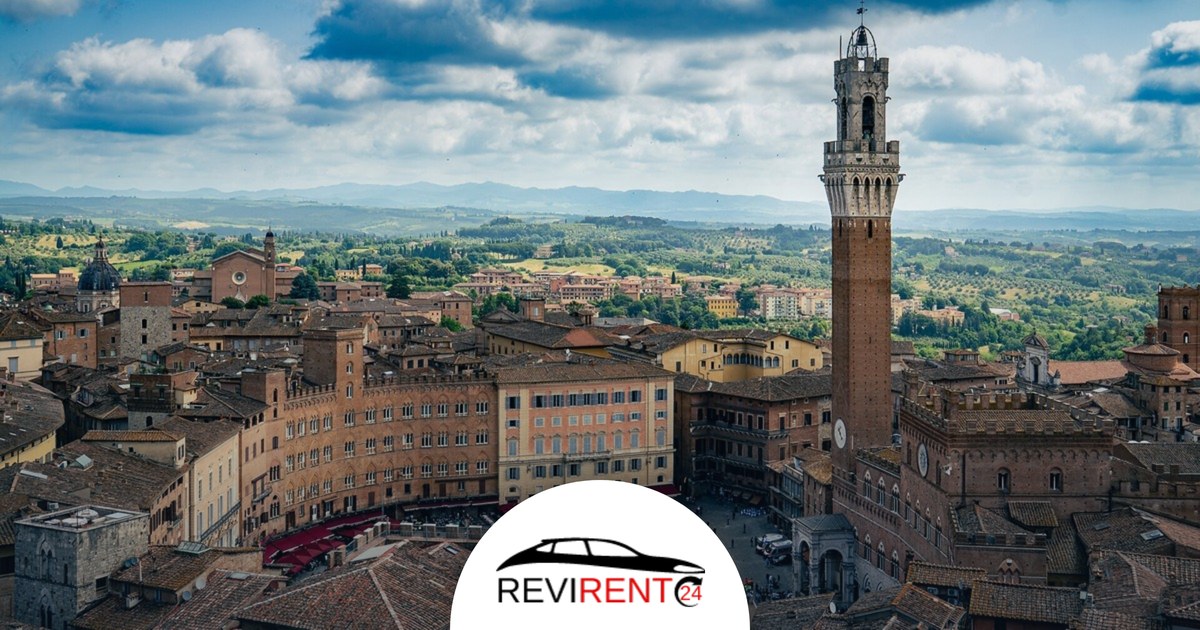
Siena is explored on foot, but you get there by car. The old town is an uphill maze, closed to traffic and a UNESCO World Heritage Site since 1995: inside the walls a car is useless. Outside, everything changes. With your own vehicle Siena becomes the gateway to the Crete Senesi, Chianti, Val d'Orcia and San Gimignano, all day-trip destinations you can only reach if you are not tied to someone else's timetable.
This guide covers what to see in a day, where to leave the car without falling foul of the restricted-traffic zone, and a practical itinerary starting from our offices in Chiusi, Città della Pieve and Montepulciano. Chiusi, as it happens, is in the province of Siena: this is our own county town.
- Written by: Matteo Bianchi
- Category: Blog
- Hits: 62
Read more: Car rental to visit Siena: what to see, where to park and a one-day itinerary
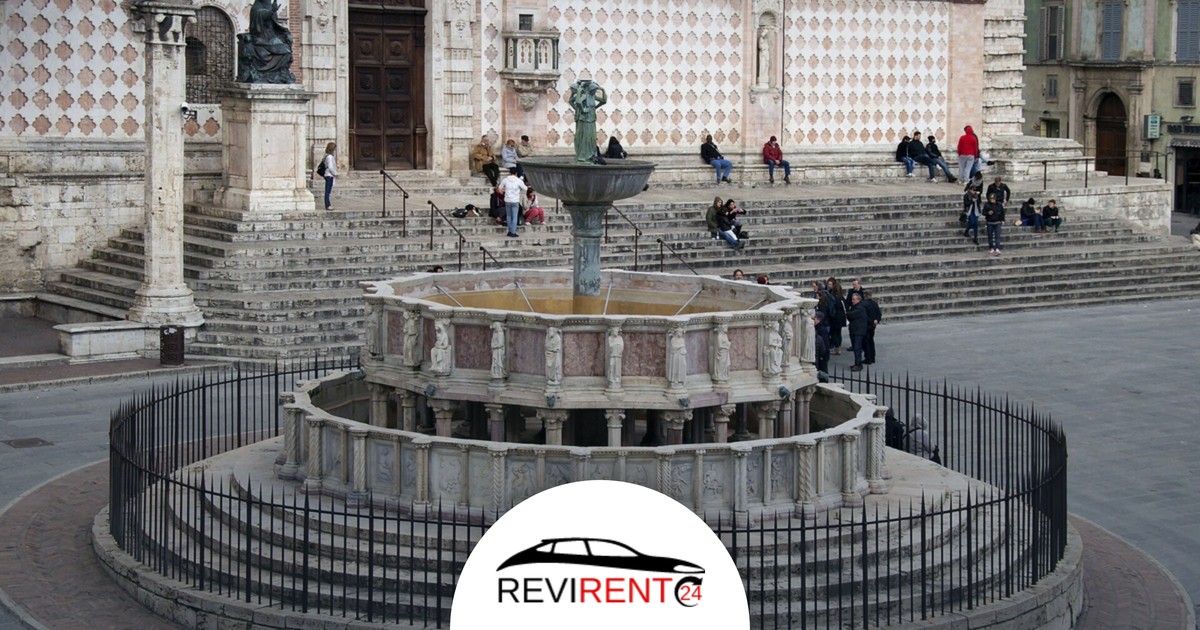
Perugia is a city you look at from above. The capital of Umbria sits on a hill, with an old town gathered around a square that has barely changed in seven hundred years. You can get there by train, but the city is where the line stops: with a rental car, Perugia becomes your base for Assisi, Lake Trasimeno, Orvieto and the whole of central Umbria, on your own schedule.
This guide covers what to see in a day, how to deal with the limited traffic zone, and a practical itinerary starting from our offices in Chiusi, Città della Pieve and Montepulciano.
- Written by: Matteo Bianchi
- Category: Blog
- Hits: 64
Read more: Car rental to visit Perugia: what to see, the traffic zone and a one-day itinerary
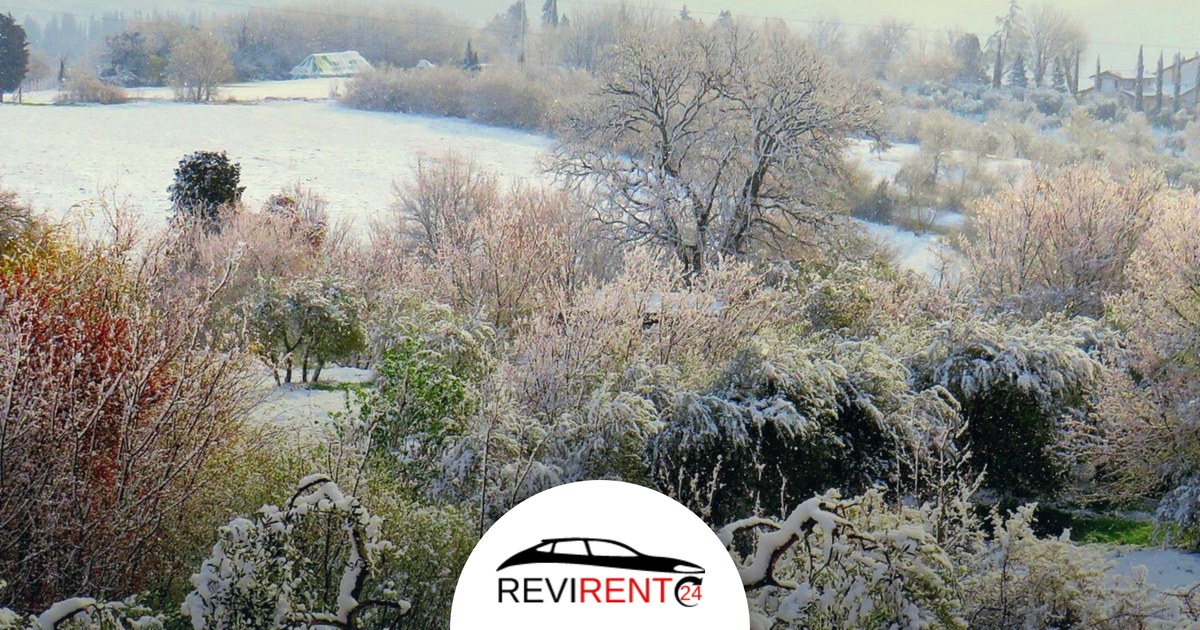
From 15 November, winter equipment becomes compulsory on much of Italy's road network. If you are driving a rental car at that time of year, the same questions always come up: does the vehicle have winter tyres? Are there snow chains on board? And who is supposed to take care of it? This guide sorts it out, with the general rules you need to know and how it works when you rent with Revirent24 between Chiusi, Val d'Orcia and Umbria.
No need to worry: driving a rental car in winter is straightforward, as long as you ask two or three of the right questions before you set off.
- Written by: Matteo Bianchi
- Category: Blog
- Hits: 92
Read more: Winter tyres and snow chains with a rental car: your guide to winter 2026-2027
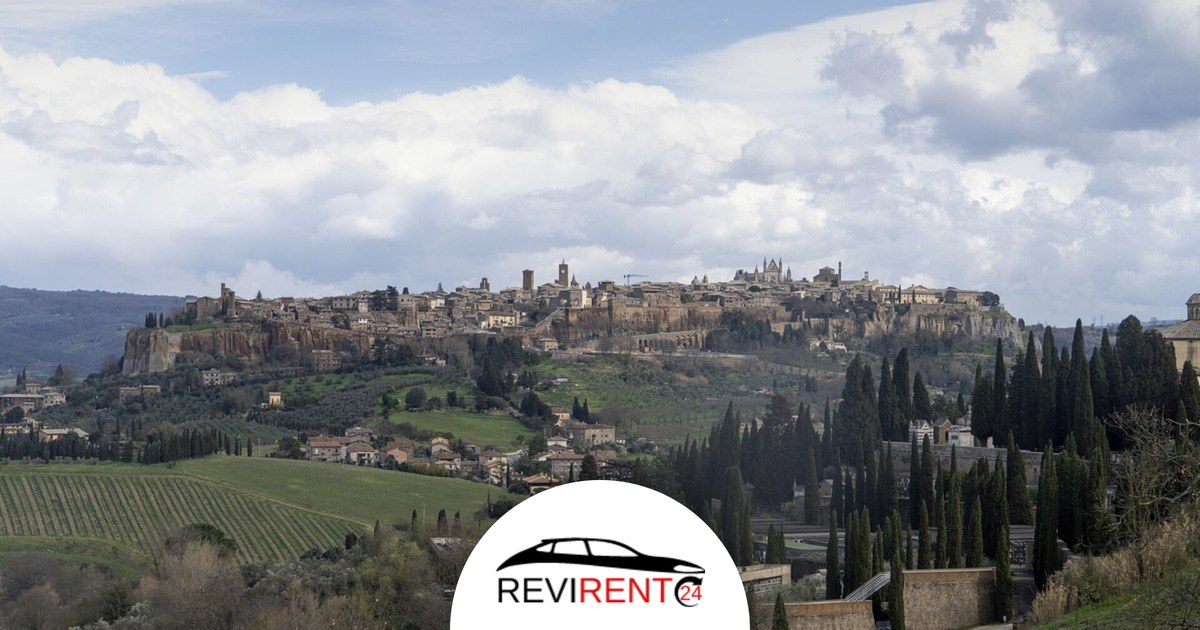
You see Orvieto long before you reach it. The town sits on top of a huge cliff of volcanic tuff that rises suddenly out of the countryside, with the profile of its cathedral closing the horizon. It is one of the most beautiful destinations in Umbria, and one you can only truly enjoy with a car at your disposal. With Revirent24 you can arrive by train at Chiusi station, pick up your vehicle and reach Orvieto and its surroundings in complete freedom, at your own pace.
In this guide you will find what to see in Orvieto, how to get there, which car to choose and an itinerary that combines the cliff, the Etruscan underground and the villages nearby.
- Written by: Matteo Bianchi
- Category: Blog
- Hits: 78
Read more: Car rental to visit Orvieto: what to see and itinerary on the tuff cliff
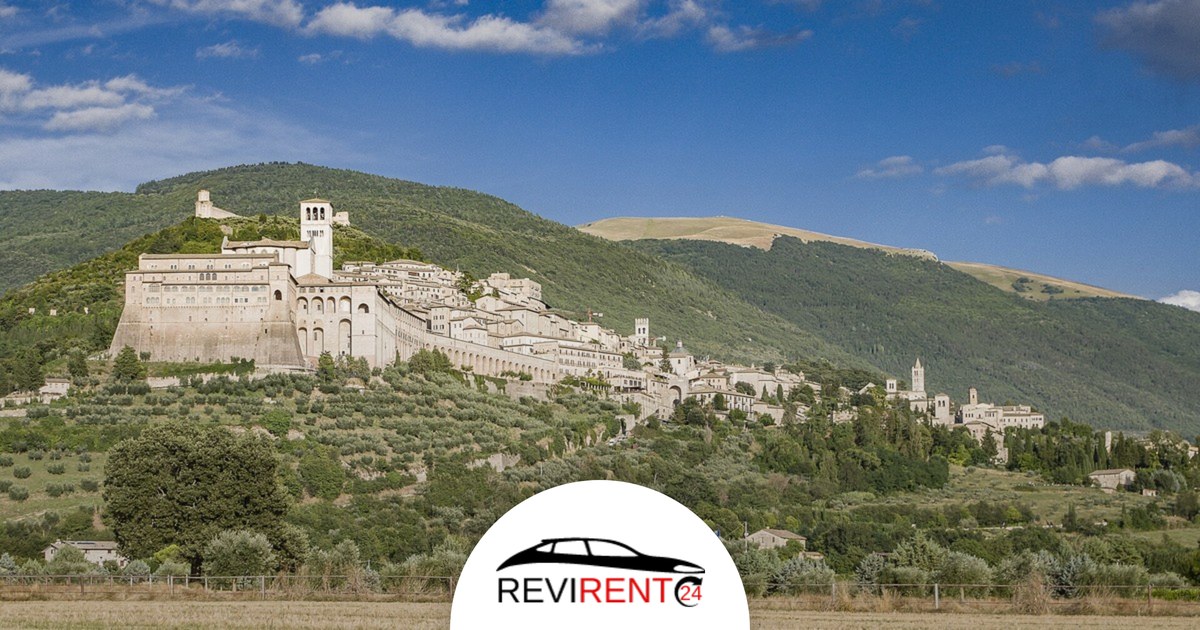
Assisi is one of those towns you truly enjoy with a car. Perched on the slopes of Mount Subasio, with the Basilica of Saint Francis overlooking the Umbrian valley, it blends spirituality, art and views that stay with you. With Revirent24 you can arrive by train at Chiusi station, rent a car and reach Assisi and its surroundings in complete freedom, at your own pace. In this guide you will find what to see, how to get there and a driving itinerary in the heart of Umbria.
If you are planning an art weekend, a spiritual journey or a slow holiday among the Umbrian villages, this is the guide for you.
- Written by: Matteo Bianchi
- Category: Blog
- Hits: 81
Read more: Car rental to visit Assisi: what to see and itinerary in Umbria
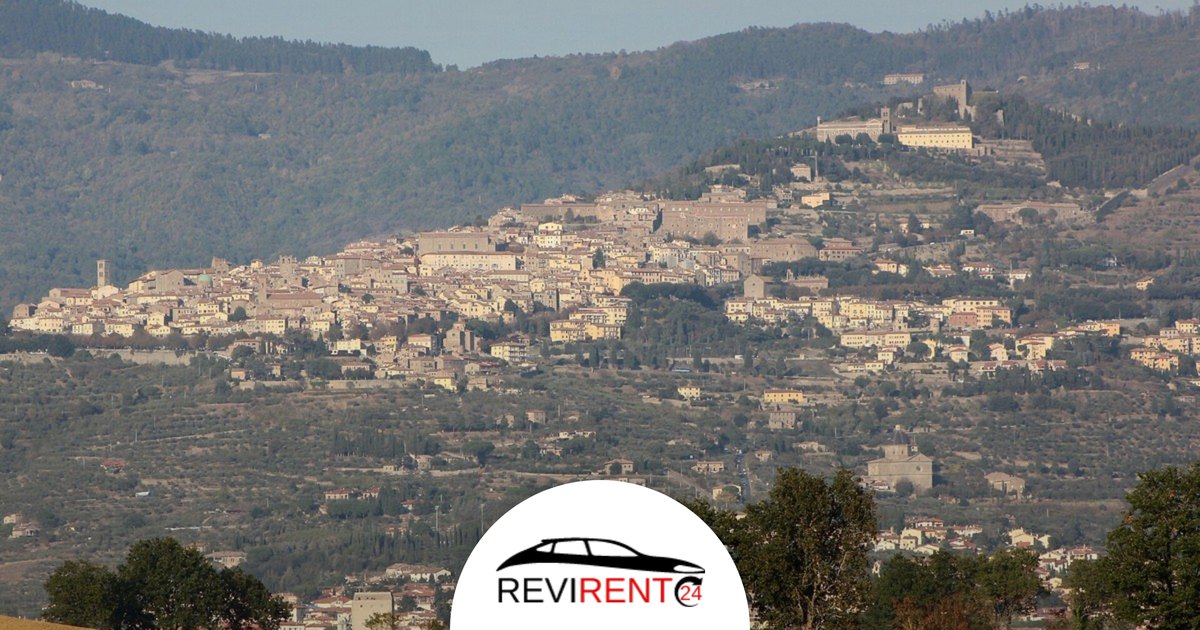
Cortona is one of those towns you can only truly enjoy with a car. Perched on a hill overlooking the Valdichiana, with Lake Trasimeno just a short drive away, it blends Etruscan art, medieval alleys and breathtaking views. With Revirent24 you can arrive by train at Chiusi station, rent a car and reach Cortona and its surroundings in complete freedom, at your own pace. In this guide you'll find what to see, how to get there and a driving itinerary between the Valdichiana and Lake Trasimeno.
Whether you're planning an art-filled weekend, a getaway among the villages or a slow holiday in the heart of Tuscany, this is the guide for you.
- Written by: Matteo Bianchi
- Category: Blog
- Hits: 85
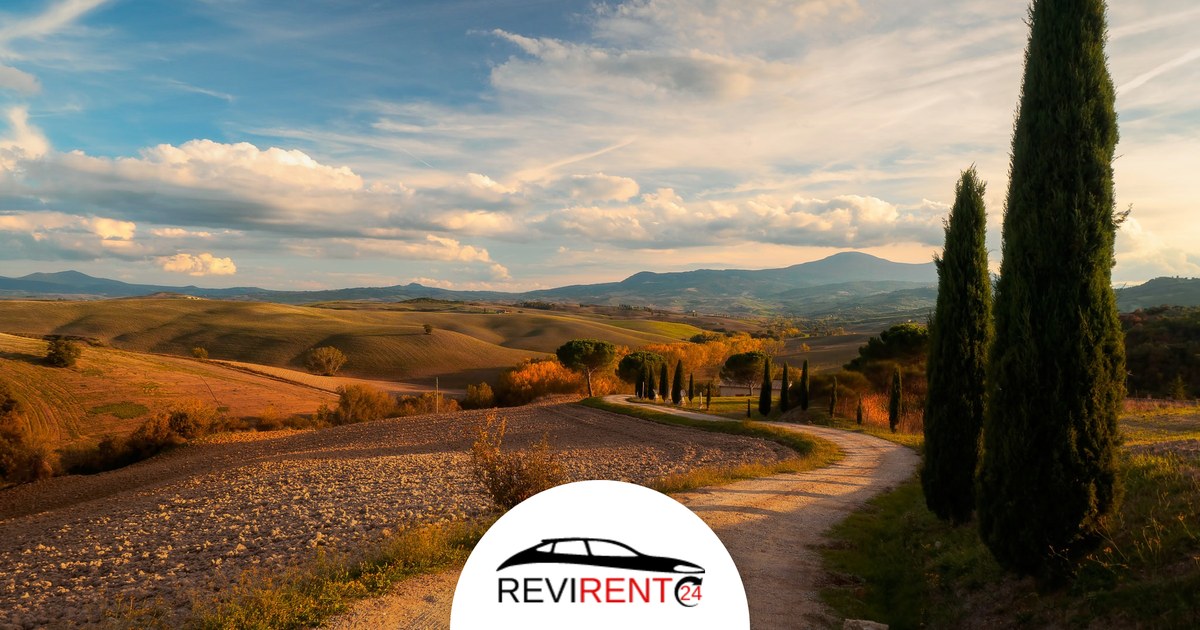
San Casciano dei Bagni is one of those villages you can only truly discover with a car. Thermal springs among the richest in Europe, one of Italy's most beautiful historic centres and the UNESCO-listed Val d'Orcia just a few kilometres away: with Revirent24 you can arrive by train at Chiusi station, rent a car and experience all of this in complete freedom, at your own pace. In this guide you'll find what to see, how to get there, a Val d'Orcia driving itinerary and practical tips to plan your trip.
Whether you're planning a spa weekend, a village-hopping escape or a slow holiday in the heart of Tuscany, this is the guide for you.
- Written by: Matteo Bianchi
- Category: Blog
- Hits: 82
Read more: Car rental in San Casciano dei Bagni: thermal baths and Val d'Orcia in freedom
How can I book a rental car?
What should I do in case of problems during the online booking process?
Is it possible to schedule vehicle pick-up outside office hours?
Is it possible to bring pets inside the rented vehicle?
Can I book a specific car model?
For how many days can I book/rent a vehicle?
Can I book a vehicle equipped with winter tires?
Can I book a vehicle with snow chains?
How can I modify my booking?
How can I cancel my booking?
Who can I contact for a summary/voucher of my booking?
Is it possible to book a vehicle with home delivery/pick-up?
What are the age restrictions for renting a vehicle?
What documents do I need to bring for the rental?
What type of insurance covers the rental vehicles?
Is there personal accident coverage for the vehicle driver?
What are my responsibilities in case of vehicle damage or theft?
I have personal coverage for damage or theft. Can I use it for my rental?
Is a credit card required to rent a vehicle?
What types of credit/debit cards are accepted as rental guarantees?
What is the amount of the security deposit?
How can I pay for the rental?
What should I do if my flight/train is delayed?
What can I do if the booked vehicle is too small?
What happens if the vehicle has pre-existing damage?
What should I do in case of a breakdown?
What should I do in case of an accident with a third party?
What should I do in case of an accident without a third party, if the vehicle is damaged?
What should I do in case of vehicle theft?
How many kilometers can I drive with the rental vehicle?
Can I drive the vehicle outside of Italy?
Is it possible to exchange the rented vehicle for another one?
How can I extend my rental or notify a late return?
Is it possible to return the vehicle earlier than expected?
Do I need to wash the vehicle before returning it?
What should I do regarding fuel refills?
Can I return the vehicle when the rental office is closed?
Can I return the vehicle to a Revirent24 office different from the pick-up office?
How does the detection, assessment, and charging of damages work?
When will the security deposit be released?
I forgot an item in the vehicle. What should I do?
How can I get the invoice for my rental?
Who can I contact to request my rental documents?
I received a fine/penalty during the rental. What should I do?
How can I file a complaint about the service received or an unclear charge?
24/7 SUPPORT
Our telephone support is available 24/7. You can contact us at (+39) 378-3035305.
CONTACTS
For any information, you can contact us at the email address: info@revirent24.it
PREMIUM QUALITY
We guarantee the high quality of our rental vehicles. Our vehicles are always new and inspected. Our customers' safety is our priority.
